



3D model of Mycenaean civilization double ear bottle replica
It is a double eared vase depicting a bull and stylized flowers, which is a replica from the Mycenaean/Late Hittite III period (1400-1100 BC) in Cyprus. This type of double ear bottle was used at that time for storing and transporting food, such as wine and olive oil. The design originated from large storage containers in the Bronze Age, which later became one of the most common shapes of ancient pottery. The Mycenaean civilization was an important stage of ancient Greek civilization, and the late Hittite III period was the late stage of this civilization. During this period, Cyprus had close ties with the Mycenaean civilization.

3D model of Mycenaean civilization drinking cup replica
It is an ancient Greek drinking cup characterized by a high foot and wide mouth. It was very popular during the Mycenaean civilization/Late Hittite III period (approximately 1400 BC to 1100 BC), especially in the Agius Cosmas region. The design is beautiful and practical. The high footed design allows drinkers to avoid direct contact with the liquid in the cup, while the wide mouth facilitates drinking. The discovery of replicas in the Agius Cosmas region provides us with important clues to understand the drinking culture of ancient Greeks. These cups are not only used for daily social activities, but may also be used in religious ceremonies and celebrations.

3D model of ancient octopus patterned eggshell cup replica
It is a very delicate and artistically valuable ancient ceramic product. The name comes from its eggshell thin cup wall, which was very advanced in ceramic production technology at that time. The production technology of eggshell cups reached its peak during the Minoan civilization (around 2000 BC to 1700 BC), especially during the Middle Minoan period. The Minoan civilization is an important component of ancient Greek civilization, mainly distributed on the island of Crete. Known for its exquisite pottery, murals, and sculptures, the Eggshell Cup is an outstanding representative of its ceramic art. He is an outstanding representative of the Minoan civilization's ceramic art.

Attic Red Painted Pottery Box - National Museum of Athens
Depicting Leto on Delos Island, preparing to give birth to Apollo and Artemis. Originating from Eretria in the 4th century BC, it is currently housed in the National Museum of Athens. It is an ancient Greek ceramic container commonly used to store jewelry, cosmetics, or other small items. The characteristic is that its surface is decorated with a red painting style, which fills the black outline of the pottery with red, while the rest of the pottery retains its natural color or is painted black. The red painting style developed between the late 6th century BC and the 5th century BC, replacing the early black painting style.

Ancient Greek Red Statue Pottery - Igleio Archaeological Museum
It is a decorative style of ancient Greek pottery that replaced the early black figure pottery style in the 5th century BC. The characteristic of red pottery is that the background is painted black, while the characters and details are retained in the red color of the pottery. This technique makes the picture more vivid and three-dimensional. It is a red clay jar from the Kamarina site. This type of pottery jar was used in ancient Greece as a container for mixing water and wine, and its design typically included a wide bottom, a short neck, and two low circular handles. It is currently housed in the Igleio Archaeological Museum in Ragusa. This pottery is an important witness to ancient Greek culture and history.

Ancient Greek ceramic containers - Castello Banfi collection
It is a ceramic container originating from ancient Greece, named after the Greek word "lekythos" which means "oil bottle". This type of container was very popular between the 6th and 4th centuries BC, mainly used for storing oil and ointment. Known for its elegant form and decorative art, it reflects the cultural and artistic level of the society at that time. Collected by Castello Banfi, it depicts a naked male figure holding his ancient Greek cloak. It is a product of the 4th century BC, possibly used in religious ceremonies or funerals as a tribute or offering to the deceased.

Ancient Greek Red Pottery Vase - Yibelo Archaeological Museum
It is an ancient Greek pottery named after its red background and black patterns. The red painted pottery vase unearthed in Camarina, Sicily, is a product of the classical period (5th century BC) and is currently housed in the Ibero Archaeological Museum in Ragusa, Italy. This kind of pottery bottle is usually used to contain oil or perfume, as burial objects at funerals, and also used in religious ceremonies. The bottle depicts a four horse chariot, which is a type of chariot pulled by four horses and commonly seen in ancient Greek mythology and art works. This demonstrates the ancient Greeks' emphasis on war and sports, as well as their worship and artistic expression of mythological stories.

Ancient Greek Macedonian Kingdom warrior helmet
The Kingdom of Macedonia (Ancient Greek: Μακεδονία) refers to a kingdom located in the northwest of Greece from 808 BC to 168 BC. During the reign of Philip II, it basically completed the unification of the Greek mainland. During the reign of Alexander the Great, it continued to expand outward, successively occupying the entire territory of Egypt and annexing the Persian Empire. Its army reached the Indus River Basin, and its territory reached its peak. At this time, the Kingdom of Macedonia was later known as the Alexander Empire.

Ancient Greek Spartan armor
Among the most powerful city states in ancient Greece, Athens ranked first and Sparta ranked second. The so-called city-state is a country that centers around a city and is surrounded by towns and villages. Sparta is located on the plain of Lagonia in the southern part of the Greek peninsula. Around the 11th century BC, a group of Greek tribes called Dorians invaded Lagonia and destroyed the original city states. They settled here, which became the Spartan city of Dorians - but it had neither walls nor decent streets. Spartans refer to the white people who came here - Dorians.

Statue of Strangford Apollo in ancient Greece
Strangford Apollo is an ancient Greek statue depicting a naked boy with missing arms and lower legs. This statue was made around 490 BC and is one of the latest examples of youth sculpture type statues, made of Parian marble. This statue has been in the collection of the British Museum since 1864.

Marble statue of the head of King Apion of Selenica in ancient Greece
Ptolemy Apion was the last king of Cyrenaica in Greece from 150 BC to 145 BC. He is a member of the Ptolemaic dynasty. This statue was made during the Hellenistic period in the 1st century BC and is 36.83 centimeters tall. The statue was discovered in the Temple of Apollo on Mount Panathos in central Greece and is now located in the British Museum.
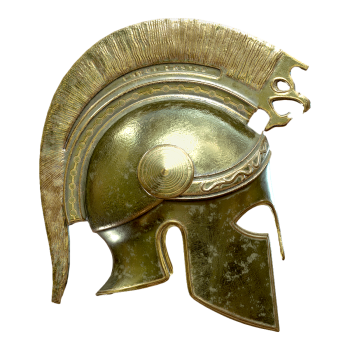
Ancient Greek Gladiator Helmet
The Ancient Greek Gladiator Helmet, also known as the Corinthian Helmet, was a type of helmet used by ancient Greek soldiers (known as Hoplitts). It is one of the most representative symbols of ancient Greek military equipment and was widely used in ancient Greek archaeological and classical periods.

Popular Models


Honey Badger (3D animated model)
192 View

Guinea fowl (3D animated model)
163 View

Wild Goose (3D animated model)
185 View

Red Fox (3D animated model)
153 View
Random Model

Monastery in Thessaloniki, Greece
1142 View


Guanyin Statue
726 View


Bronze Faucet for Yard Irrigation
812 View

pasteurized tongue sole specimen
612 View

Fiberglass dual-use ladder
877 View


M939 transport truck
902 View